Puppy-Proofing Your Home Before Homecoming
A little preparation before your puppy arrives turns a chaotic first week into a calm one. Puppy-proofing is mostly about seeing your home the way a curious, low-to-the-ground explorer will.
Small-breed puppies are fast, low and endlessly curious. Get down to their eye level, room by room, and remove the temptations before they find them. Here is the checklist we give every family.
Room by room
Living areas
- Tuck away cords and chargers, which are perfect chew height for a small puppy.
- Move houseplants up. Several common ones are toxic to dogs.
- Clear low shelves of anything small enough to swallow.
- Add sofa and bed ramps, especially for a Dachshund, before day one.
Kitchen and bathroom
- Use childproof latches on cupboards with cleaning products or medication.
- Secure the trash behind a door or with a locking lid.
- Keep human food out of reach. Chocolate, grapes, raisins, onions, garlic and xylitol are all dangerous.
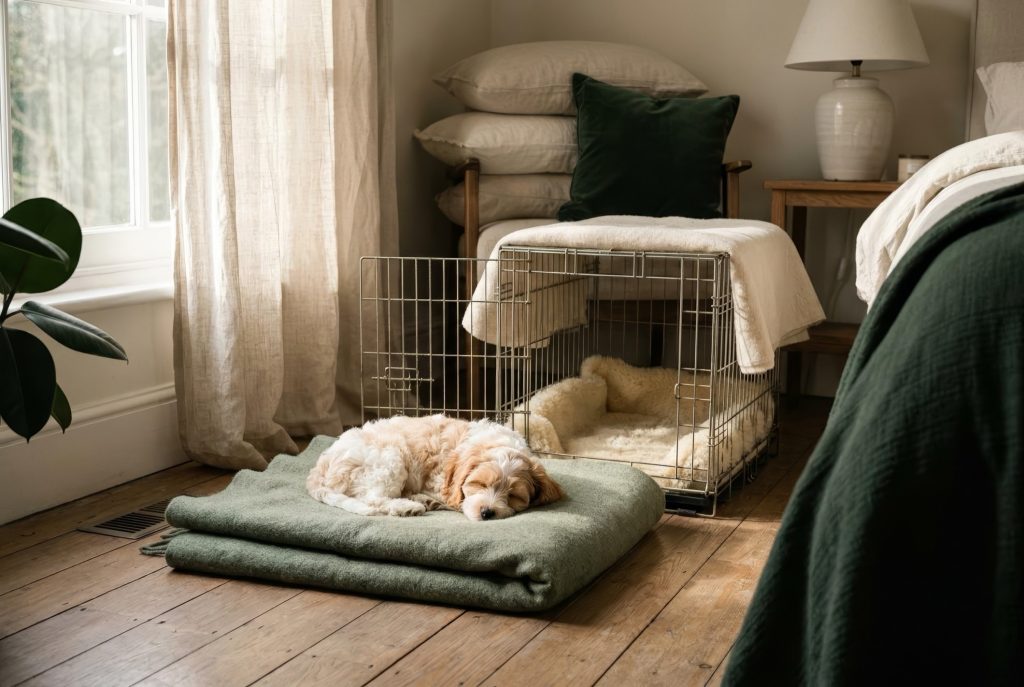
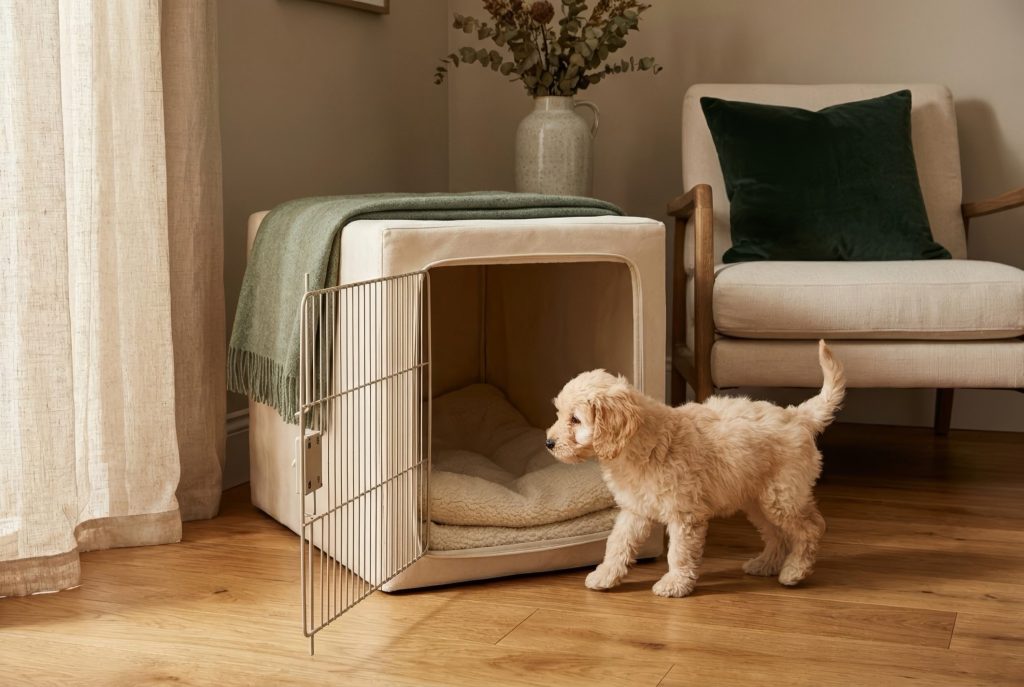
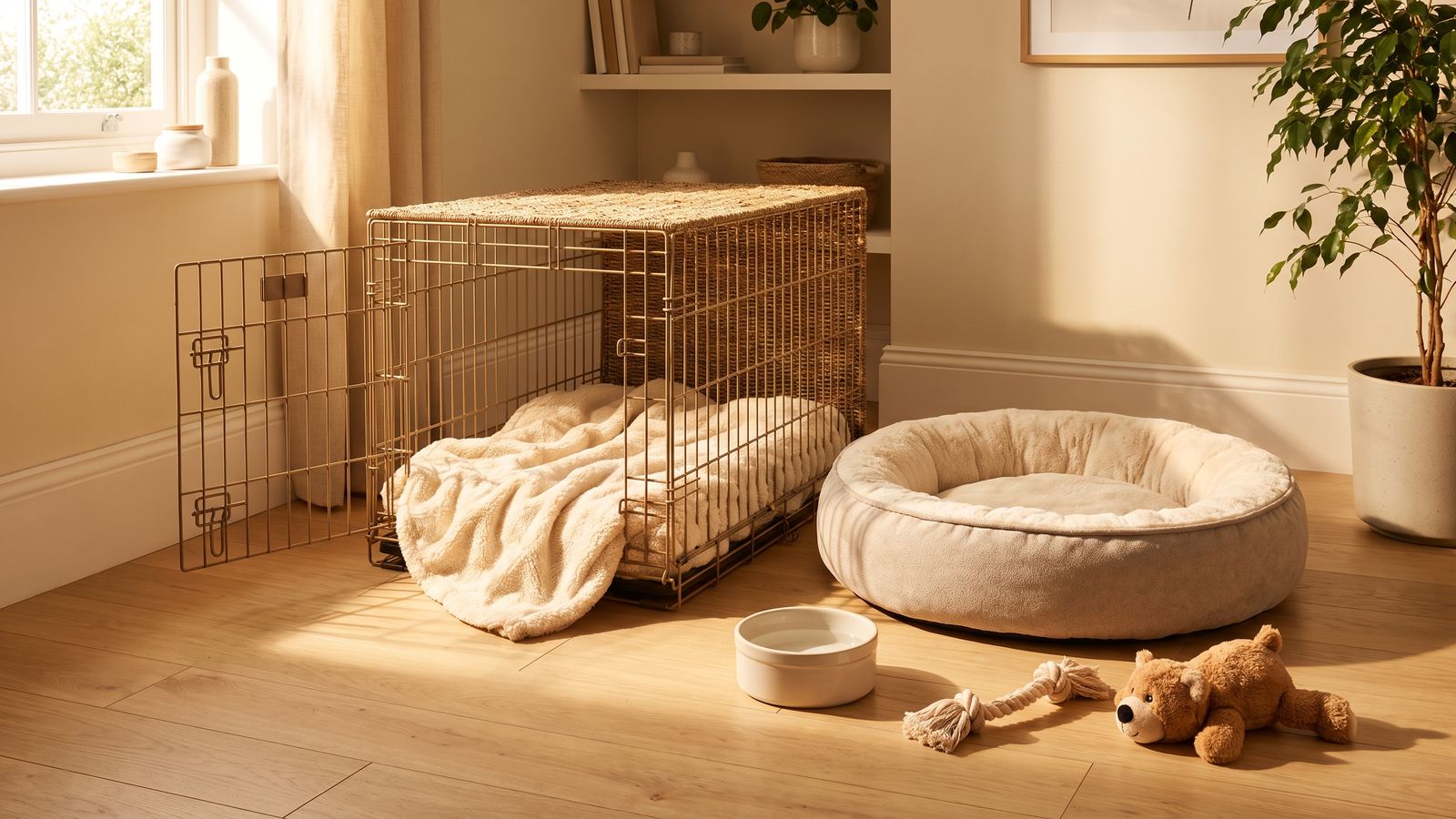
The single best puppy-proofing tool is a smaller world. A crate, a playpen or one gated room keeps a new puppy safe, speeds up house training, and saves your belongings. Freedom is something a puppy earns as it grows.
The setup shopping list
- A correctly sized crate and a soft, washable bed.
- Food and water bowls, and the exact food your puppy is already eating.
- A flat collar with an ID tag, plus a harness and a light leash.
- Safe chew toys in a range of textures.
- Enzyme cleaner for the inevitable accidents.
- Puppy pads or a clear route to the outdoor potty spot.
The garden
If you have a yard, walk the fence line for gaps a small puppy could squeeze through, and check for toxic plants and gaps under gates. A determined Dachshund, in particular, will find any weakness in a fence.
- See it at puppy height. Cords, plants and small objects are the usual hazards.
- Confinement is kindness. A crate or one gated room keeps a puppy safe and speeds training.
- Set up before, not after. Have the crate, food and ramps ready on day one.
If you suspect your puppy has eaten something toxic, contact your veterinarian or an animal poison line immediately rather than waiting for symptoms.
More from the Everpine Journal
- Bringing Home
Your Puppy’s First 48 Hours at Home
6 min read - Bringing Home
First-Time Owner? How to Choose Your First Small-Breed Puppy
2 min read - Training
Crate Training Without the Stress: A Gentle 7-Day Plan
5 min read