Your Puppy’s First 48 Hours at Home
The first two days at home matter more than almost anything else you will do in the first month. Here is exactly how we recommend structuring them: quietly, slowly, and with far fewer visitors than you think.
Every Everpine puppy leaves us settled, socialized and used to a predictable daily rhythm. The single best thing you can do in the first forty-eight hours is keep that rhythm going while your puppy learns one enormous new thing: that this house, these people and these smells are home.
Puppies do not arrive needing entertainment. They arrive needing sleep, water, a small quiet space and a very short list of gentle expectations. Everything below is built around that idea.
Before your puppy walks in
Set the house up the day before, not the morning of. Arrival day is much calmer when nothing needs assembling while a puppy watches from your arms.
- Choose one quiet room. Not the busiest room in the house. A corner of a bedroom, a home office or a low-traffic living space works well.
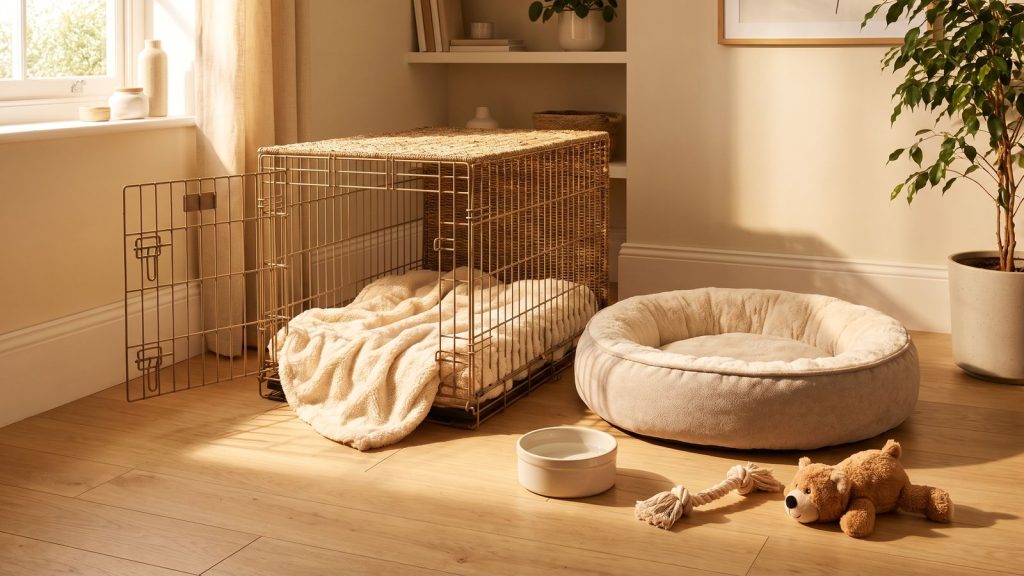
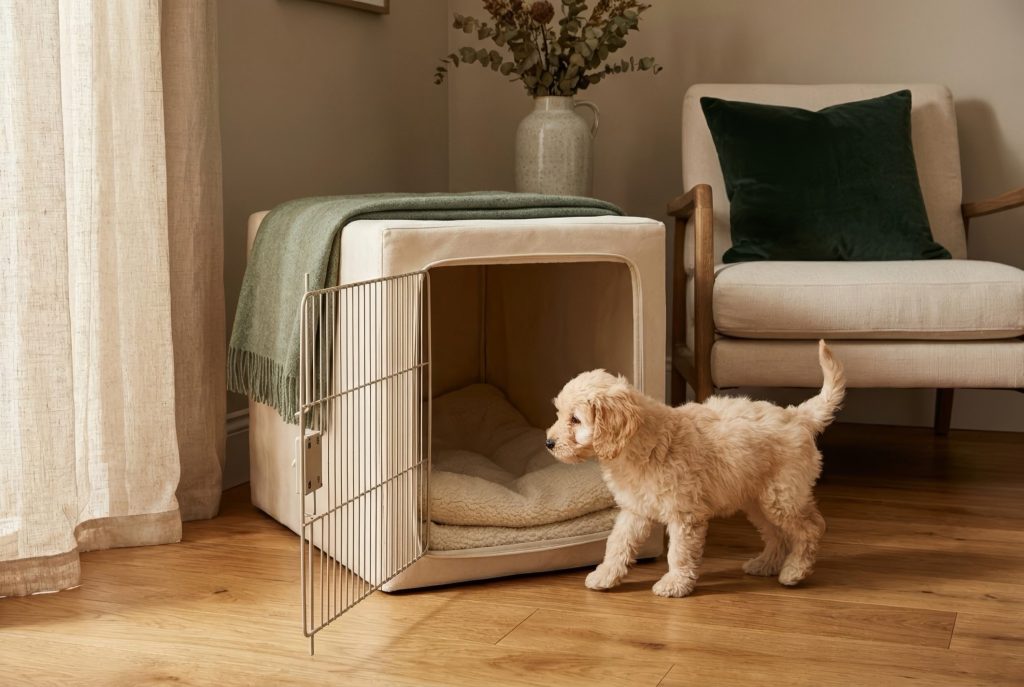
- Set up the crate with the door open. Soft bedding, a familiar-smelling blanket, and nothing your puppy can shred and swallow.
- Put water down in a shallow, tip-proof bowl and keep it in the same place from day one.
- Pick the potty spot outside: one specific patch of ground you will return to every single time.
- Puppy-proof at floor level. Get on your knees and look. Cords, shoelaces, houseplants, small toys, cleaning products under the sink.
- Unpack the welcome kit. Your starter food supply, health records and Puppy Care Starter Guide all travel home with your puppy, so keep them together on a shelf you will actually use.
We send your puppy home on the exact food they have been eating with us. Do not switch brands in the first two weeks, even to something more expensive. A sudden diet change on top of a new home is the most common cause of an upset stomach in week one.
Hours 0 to 2: arrival
Carry your puppy straight to the potty spot before you go inside. Stand still, stay quiet, and give them a few minutes. If they go, praise warmly and calmly. No shrieking, no clapping. If they do not, go inside and try again in fifteen minutes.
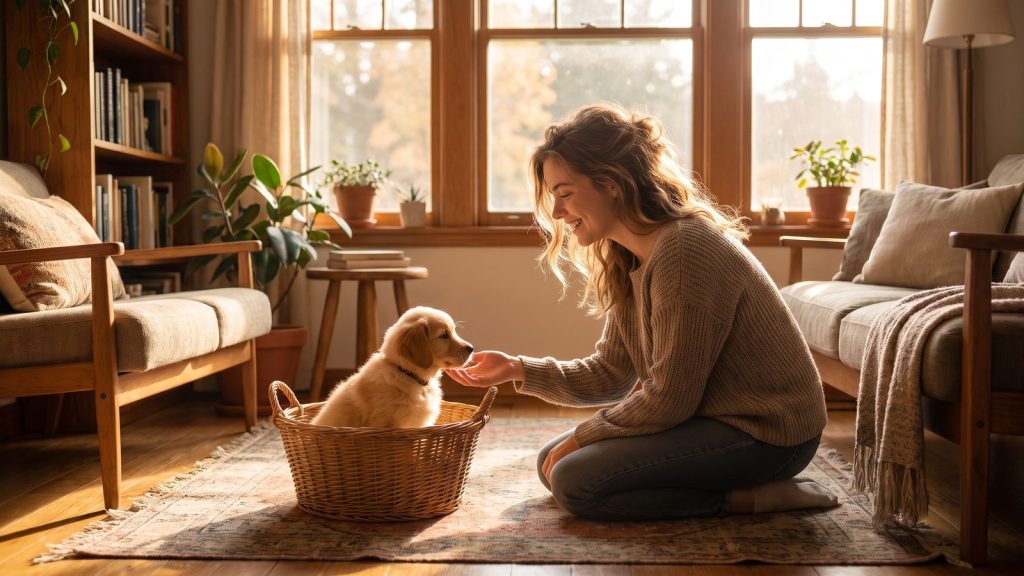
Then let them explore the one quiet room on their own four feet. Sit on the floor. Let the puppy come to you rather than being passed around. Resist the urge to give a tour of the whole house; the rest of the rooms can wait until day three.
The goal of day one is not a puppy who has met everyone. It is a puppy who has slept well, eaten normally and learned where the door is.
Keep the guest list at zero
This is the advice people most want to ignore and most regret ignoring. Friends, neighbours and extended family can meet the puppy at the end of week one. For the first forty-eight hours, the only people your puppy needs to know are the ones who live in the house.
The first night
Expect some crying. It is not a sign that anything is wrong. Your puppy has slept beside littermates every night of their life and is doing so alone for the first time.
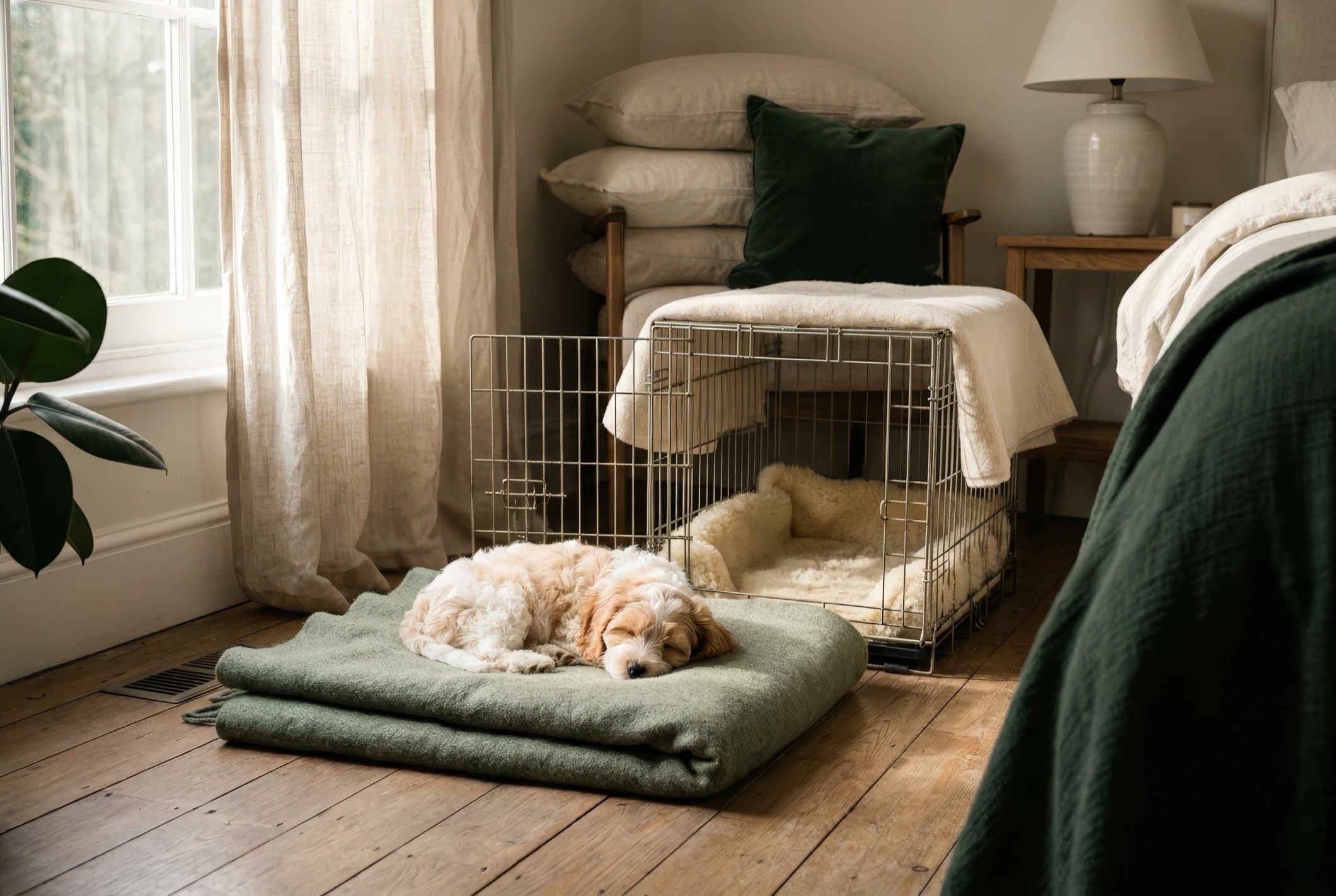
- Put the crate beside your bed. Being able to hear and smell you halves the protest for most puppies. You can move the crate gradually later if you want to.
- Last meal about three hours before bed, water up about an hour before.
- One final potty trip immediately before lights out, with no play attached to it.
- Expect one or two night wakings. Take your puppy out on lead, no talking, no toys, straight back to the crate afterwards.
- Do not start a habit you do not want. If you lift the puppy into your bed at 3am on night one, that is the deal you have made.
Day two: build the rhythm
Day two is when structure starts paying you back. Keep the same feeding times we used, the same potty spot, and the same short cycle of activity and rest.
| Time | What happens |
|---|---|
| On waking | Straight outside to the potty spot, then breakfast |
| After every meal | Outside within 10 to 15 minutes |
| After every nap | Outside immediately. This is the one people forget |
| Every 1 to 2 hours | Outside, regardless of signals |
| Play sessions | 5 to 10 minutes, several times a day, then rest |
| Sleep | 16 to 20 hours a day is completely normal at eight weeks |
Let them sleep
An eight-week-old puppy needs an enormous amount of sleep, and an overtired puppy looks almost exactly like a badly behaved one: biting, frantic zoomies, an inability to settle. If your puppy has been awake for more than an hour and is getting wild, the answer is almost always a nap in the crate, not more play.
What is normal, and what is not
Some wobble in the first two days is expected. A puppy who is a little quiet, eats slightly less than usual on day one, or has one softer stool is generally adjusting.
Call your veterinarian promptly if you see any of the following:
- Refusing food or water for more than about twelve hours
- Repeated vomiting, or diarrhoea that continues beyond a day
- Lethargy that does not lift after rest, or weakness and unsteadiness
- Any blood in stool or vomit
- Laboured breathing, or a persistent cough
Small-breed puppies can also drop their blood sugar if they go too long without eating, especially in a stressful first week. Stick to the feeding schedule and do not let meals slide.
Book the first vet visit
Schedule a wellness examination within the first three to five days, and take the health records that came home in your welcome kit. Your veterinarian will confirm your puppy is thriving, review the vaccination schedule and set up parasite prevention. It is also the visit that activates the documentation side of our health guarantee, so it is worth doing early rather than eventually.
- Keep it small. One quiet room, no visitors, no house tour for the first two days.
- Keep it identical. Same food, same feeding times, same potty spot as the routine your puppy already knows.
- Crate beside your bed on night one, and expect to get up once or twice.
- Sleep is not optional. A wild puppy is usually an overtired puppy.
- Book the veterinary visit within three to five days and bring the records from the welcome kit.
This article is general guidance based on how we raise our puppies. It is not a substitute for veterinary advice. Always follow the recommendations of the veterinarian who examines your puppy.
More from the Everpine Journal
- Bringing Home
First-Time Owner? How to Choose Your First Small-Breed Puppy
2 min read - Bringing Home
Puppy-Proofing Your Home Before Homecoming
2 min read - Training
Crate Training Without the Stress: A Gentle 7-Day Plan
5 min read