Maltipoo Colors, and Why They Change
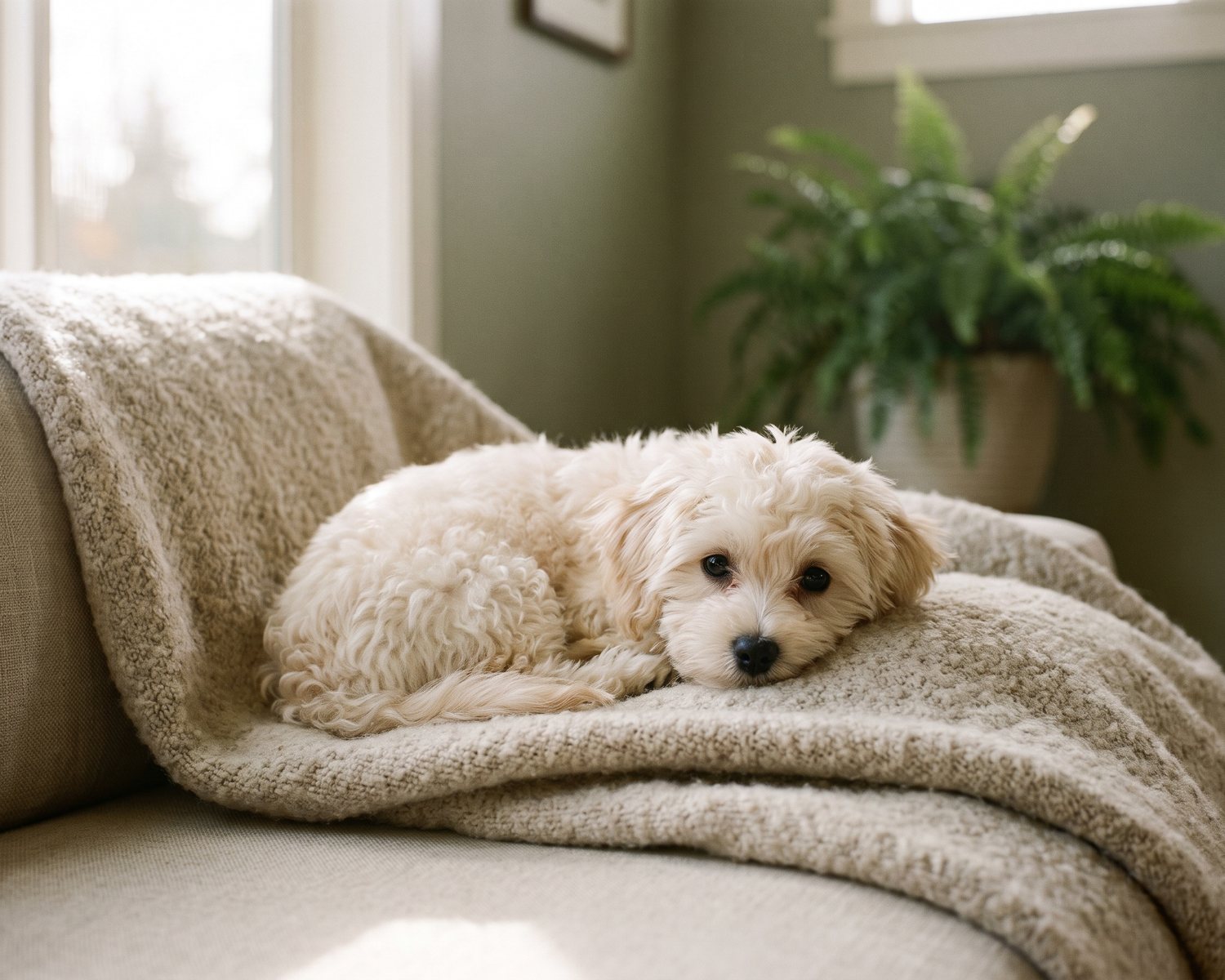
Maltipoo coats come in a short list of colors and one long-running complication: many of them change. The apricot puppy in the photograph is often a cream adult, and that is normal rather than a bait and switch.
Color is usually the first thing people ask about when they are looking at available Maltipoo puppies, and it is the trait most likely to shift over the first eighteen months. Here is the honest version.
The colors you will see
| Color | What it looks like | Likely to change? |
|---|---|---|
| Cream and white | Ivory through to near-white | Stable |
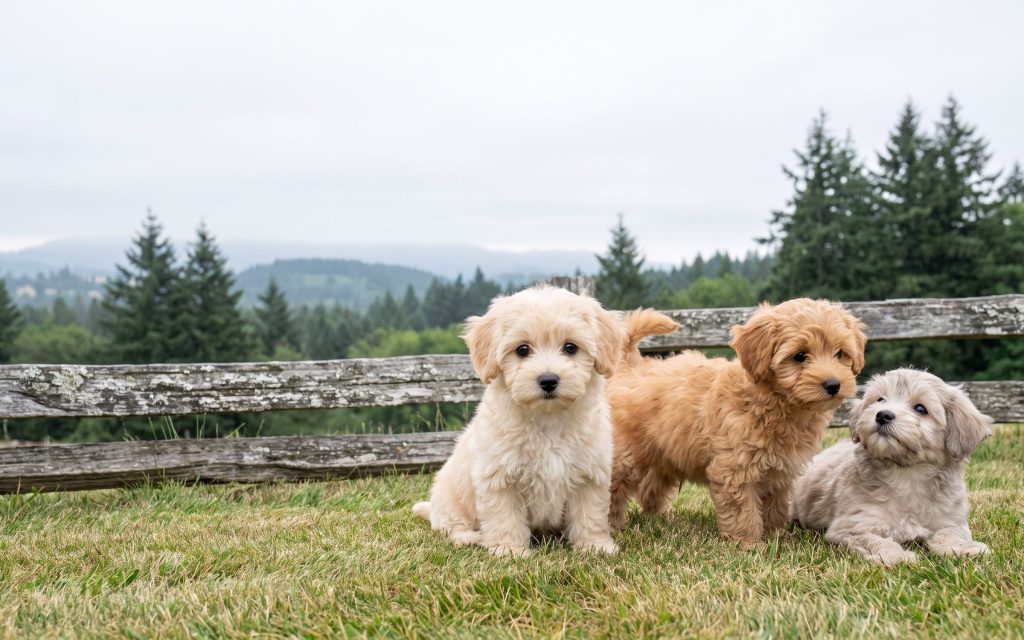
| Apricot | Warm pale orange | Very often lightens towards cream |
| Red | Deep ginger, the richest of the warm tones | Frequently fades a shade or two |
| Black | True black, sometimes with a white chest flash | Can soften towards charcoal or silver |
| Chocolate or brown | Warm brown, usually with a brown nose | Often lightens to cafe au lait |
| Black and white, or parti | Two clear colors in patches | Patches stay; the dark tone may soften |
| Phantom | Solid base with defined tan points above the eyes, on the muzzle, chest and legs | Points usually hold |
Why apricot puppies become cream adults
The Poodle side of the cross carries what breeders call the fading or clearing gene. In dogs that inherit it, pigment is progressively lost from the hair shaft as the adult coat grows in, so the dog lightens over roughly the first year to eighteen months.
Two useful tells. The hair at the roots and around the ears often holds the original depth longest, so parting the coat gives you a sense of where the dog started. And the ears themselves frequently stay darker than the body, which is why a faded red adult can look two-tone.
Any breeder who guarantees that an apricot puppy will still be apricot at two years old is telling you something they cannot know. What an honest listing does is describe the puppy as it is now and say plainly that the color may change. That is what our puppy cards do.
Merle, and why we do not breed it
Merle Maltipoos exist and are sometimes advertised at a premium. The merle gene is not native to either the Maltese or the Poodle in the traditional sense, so a merle Maltipoo means merle came in from somewhere else in the line. More importantly, breeding two merle-carrying dogs together can produce puppies with two copies of the gene, and those dogs carry a serious risk of deafness and eye defects.
If you are looking at a merle puppy from any breeder, ask directly whether both parents carry merle. A breeder who cannot answer, or who does not understand the question, is not someone to buy a merle dog from. We do not breed merle Maltipoos.
Color and coat are separate questions
It is easy to conflate the two because both are visible at once, but they are inherited independently. A Maltipoo coat can be wavy, loosely curled or tightly curled, and that is what decides your grooming routine, not whether the dog is cream or chocolate. All of them are low-shedding and none of them are hypoallergenic in any absolute sense. We have written an honest answer on that here.
If you are choosing on looks, the coat type is the thing that will affect your week. A realistic at-home and groomer routine covers what each one asks for.
A practical way to choose
- If you want a color you can count on, cream and white and the parti patterns are the most stable.
- If you love the warm tones, choose them knowing they may soften. Most owners end up fond of the adult color anyway.
- Ask what color the parents are now, as adults, rather than what they were as puppies. It is the single most informative question available.
- Then set color aside and choose on temperament and expected adult size, which are the two things you will live with daily. How big do Maltipoos get covers the second.
- Cream, apricot, red, black, chocolate, parti and phantom cover almost every Maltipoo you will see.
- Fading is normal. Apricot and red very often lighten through the first year.
- Merle deserves a direct question about both parents before you go any further.
- Coat type, not color, sets your grooming routine.
The colors available right now are listed on each card, and color is one of the filters on the Maltipoo puppies page.
Color descriptions are general and change as a puppy matures. For questions about coat, skin or inherited conditions linked to coat color, consult your veterinarian.
What to ask about the color you see today
A light apricot or cream Maltipoo may look different once the adult coat comes in. Lighting, clipping and ordinary coat maturation can also change the way a shade appears in photographs. If color matters to you, ask for current, naturally lit pictures and remember that the color on a young puppy card may not be a permanent match.
You can browse Everpine’s available puppies to compare current coats and the other characteristics that matter just as much: personality, care needs and expected adult size.
More from the Everpine Journal
- Breeds
Dachshund Colors and Coat Types, Explained
5 min read - Breeds
How Big Do Cavapoos Get? Full-Grown Size Explained
4 min read - Breeds
How Big Do Maltipoos Get? Full-Grown Size Explained
4 min read