Feeding Your Puppy: Portions, Timing and Safe Transitions
Good feeding is not complicated, but it is specific. Portions, timing and how you handle a food change do more for your puppy’s first year than any supplement on the shelf.
What a puppy eats in the first twelve months shapes their joints, coat, digestion and energy. We keep feeding simple, measured and consistent, and we send every Everpine puppy home on the exact food they are already eating, so nothing changes on the hardest day of their life.
Start with the food you were given
Your welcome kit includes a starter supply of your puppy’s current food. Use it. The first fortnight at home is the worst possible time to introduce a new protein, a new kibble size or a new feeding philosophy.
If you want to change food later, that is completely reasonable. Wait until your puppy has been settled for at least two weeks, then transition slowly using the schedule further down this page.
Choose a complete and balanced puppy formula from an established manufacturer, appropriate for your puppy’s expected adult size. Small-breed puppy formulas have smaller kibble and a calorie density suited to Maltipoos, Cavapoos and Dachshunds. Your veterinarian is the right person to sign off on any specific brand.
How often to feed
Puppies have small stomachs and fast metabolisms, so they eat little and often. Meal frequency reduces as they grow.
| Age | Meals per day | Notes |
|---|---|---|
| 8 to 12 weeks | 4 | Small-breed puppies especially should not go long between meals |
| 3 to 6 months | 3 | Spread evenly across the day |
| 6 to 12 months | 2 to 3 | Drop to two once growth slows |
| 12 months + | 2 | Discuss the move to adult food with your veterinarian |
Feed at the same times every day. Predictable meals produce predictable toilet habits, which makes house training dramatically easier.
How much to feed
Start with the manufacturer’s guideline for your puppy’s age and expected adult weight, then adjust based on the puppy in front of you rather than the number on the bag. Two puppies of the same weight can need noticeably different amounts.
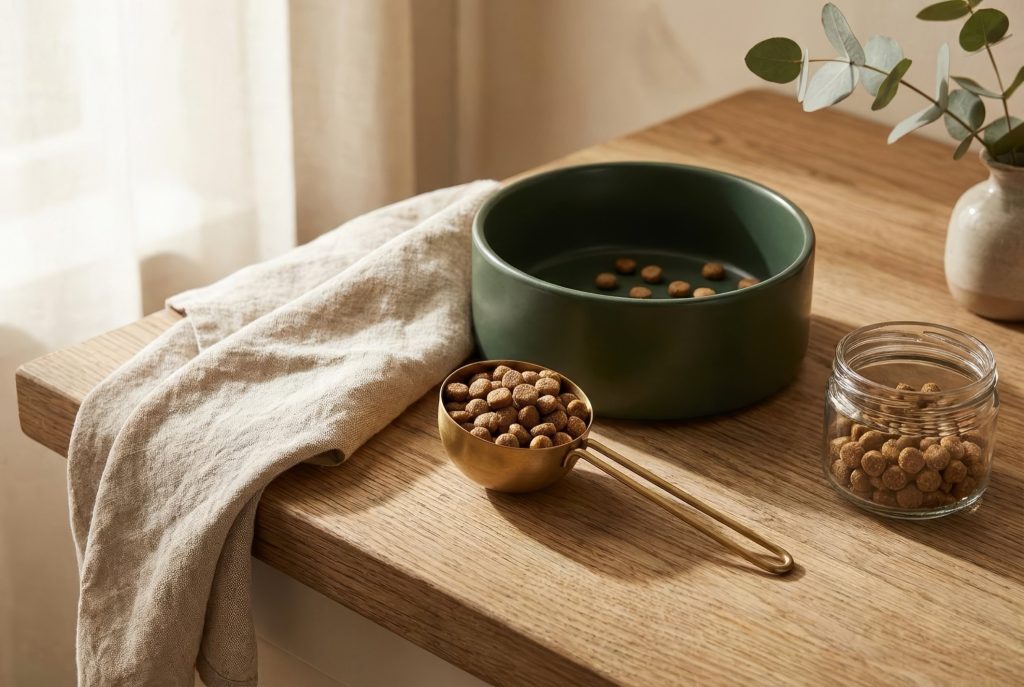
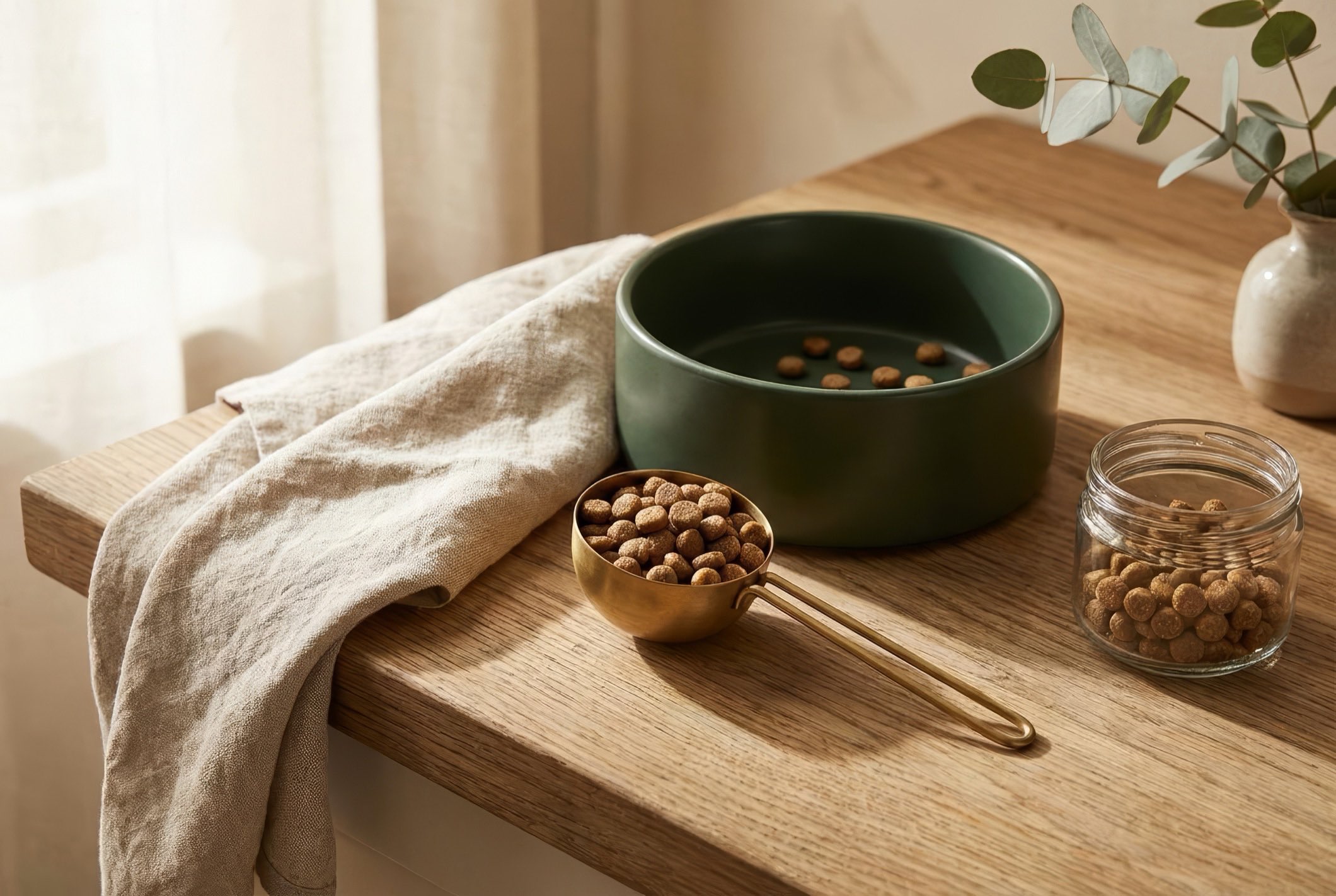
Measure every meal with a proper measuring cup or a kitchen scale. Eyeballing portions is the most common reason puppies quietly become overweight.
Checking body condition
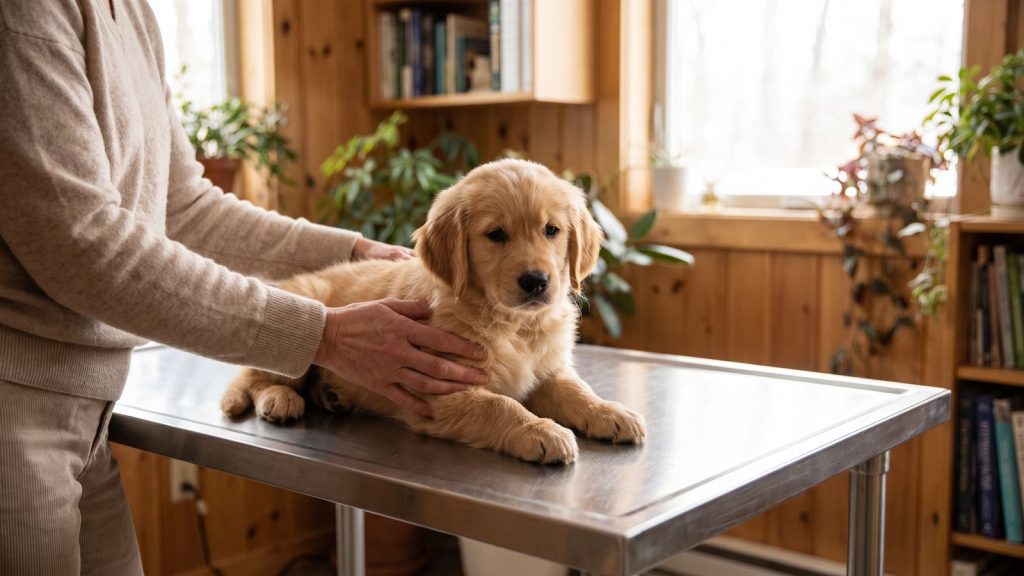
Once a week, run your hands over your puppy rather than looking at them. You are checking for three things:
- Ribs you can feel easily under a thin layer of covering, without pressing hard
- A visible waist when you look down from above
- A gentle upward tuck of the abdomen when viewed from the side
If ribs are becoming difficult to find, reduce the portion slightly. If they feel sharp and the waist looks pronounced, increase it. Steady, unremarkable growth is the goal. Rapid weight gain is not a sign of health, particularly for a long-backed breed like the Dachshund.
Lean puppies grow into sounder adults. The aim is a steady climb, not a fast one.
Transitioning to a new food
When the time comes to change food, do it over seven to ten days. Mix the new food into the old and increase the proportion gradually.
| Days | Current food | New food |
|---|---|---|
| 1 to 2 | 75% | 25% |
| 3 to 4 | 50% | 50% |
| 5 to 6 | 25% | 75% |
| 7 to 10 | 0% | 100% |
If stools soften at any stage, hold at the previous ratio for a few extra days instead of pushing forward. A slow transition that takes two weeks is far better than a fast one that costs you a week of upset stomach.
Water
Fresh, clean water should be available at all times during the day, in the same bowl in the same place. The one exception is the hour before bed while you are house training, when lifting the bowl helps everyone sleep. Wash the bowl daily. It grows a film faster than most people expect.
Treats, and the ten percent rule
Treats are genuinely useful. They are how you pay a puppy for coming when called, settling in a crate and tolerating a nail trim. Use them deliberately.
- Keep treats to roughly ten percent of daily calories, and reduce meal portions slightly on heavy training days.
- Use very small pieces: a puppy values the event far more than the size.
- Part of the daily kibble ration makes an excellent training treat and costs nothing extra.
- Choose treats sized for small breeds, and avoid anything hard enough to risk a tooth.
Foods to keep away entirely
Some everyday human foods are genuinely dangerous for dogs. Keep these out of reach rather than relying on training:
- Chocolate: contains theobromine, which dogs cannot process the way people do
- Xylitol: a sweetener in sugar-free gum, sweets, some peanut butters and baked goods
- Grapes and raisins: associated with serious kidney problems, even in small amounts
- Onion, garlic and chives: including powders and sauces hidden in cooked leftovers
- Alcohol and caffeine: including coffee grounds, tea bags and unbaked yeast dough
- Macadamia nuts: commonly cause weakness and digestive upset
- Cooked bones: they splinter and can injure the mouth and digestive tract
If you think your puppy has eaten something unsafe, contact your veterinarian or an animal poison control service right away rather than waiting for symptoms.
When to call your veterinarian
- Refusing food for more than about twelve hours
- Repeated vomiting, or diarrhoea lasting longer than a day
- Weight that is climbing rapidly, or not climbing at all
- Persistent itching, ear problems or loose stools that follow a food change, which can point to a sensitivity
If your puppy does turn out to need a specialised diet, we will work alongside you and your veterinarian to find the right approach.
- Keep the food identical for the first two weeks at home. We send a starter supply for exactly this reason.
- Four meals a day at eight weeks, reducing to two by around twelve months.
- Measure every portion and adjust by body condition, not by the number on the bag.
- Transition new food over seven to ten days, and pause if stools soften.
- Treats stay under ten percent of daily calories; kibble makes a perfect training reward.
This article is general guidance based on how we raise our puppies. It is not a substitute for veterinary advice. Always follow the feeding plan recommended by the veterinarian who examines your puppy.
More from the Everpine Journal
- Health & Nutrition
Puppy Vaccinations and Deworming: A Simple Timeline
2 min read - Health & Nutrition
Choosing the Right Food for a Small-Breed Puppy
2 min read - Health & Nutrition
Your Puppy’s First Vet Visit: What to Bring and What to Ask
2 min read