How to Choose a Responsible Breeder
There is no licence that separates a responsible breeder from a careless one. What there is instead is a set of questions, and a pattern in how the answers come back.
Most people buying a puppy are doing it for the first time, from a distance, on the strength of photographs. That is an uncomfortable position, and the industry has plenty of operators who rely on it. This guide is written to be used against any breeder, including us.
Ask these seven questions
- Where are the puppies raised? A specific answer describes a place: a room, a whelping area, who is around during the day. A vague answer describes a feeling.
- Can I see the puppy live on video? A real breeder with a real puppy can show you that puppy, on request, moving around. This single question ends most scams.
- What veterinary care has this puppy had, and when? You should be able to get dates: examinations, vaccinations, deworming. Not “fully vetted”.
- What does the health guarantee cover, in writing, and what do I have to do to keep it valid? Ask for the document before you pay anything. Guarantees usually carry conditions, and the conditions are the part worth reading.
- What health testing was done on the parents? This varies by breed. It is fair to ask what was tested and to see the results.
- What happens if this does not work out? Serious breeders have an answer, usually involving taking the dog back rather than letting it enter the shelter system.
- How do you take payment? The answer should be a traceable method that leaves you a record.
Ask the same question twice, a week apart, in slightly different words. Someone describing a real puppy in a real place gives you the same answer with different details. Someone working from a script does not.
Warning signs worth taking seriously
- Payment by wire transfer, gift card or cryptocurrency only. These are chosen because they cannot be reversed. This is the most common single indicator of a scam.
- Photographs that appear elsewhere. Run a reverse image search on any photo you are sent. Stolen photos are the backbone of fake listings.
- Unwillingness to substantiate basic claims. Ask for clear answers about the puppy, parent health information, written terms and the people responsible for delivery. Repeated evasions are a warning sign.
- Unexpected fees after the deposit. A crate deposit, an insurance fee, a customs charge that was never mentioned. Legitimate costs are disclosed before you pay.
- Pressure. “Two other families are asking” is a sales technique, not information.
- Puppies offered under eight weeks old. Leaving the litter too early causes lasting behavioural problems, and in many states it is illegal.
- Every breed, always in stock. A single operation offering six or eight breeds with constant availability is a broker, a mill, or a website.
- No questions for you. A breeder who does not care who you are, whether you have other pets, or what your household looks like is not screening homes.
Puppy mill, backyard breeder, responsible breeder
These three terms get used loosely, so it is worth separating them.
| Scale | Typical tell | |
|---|---|---|
| Puppy mill | Commercial, high volume | Dogs housed as stock; puppies sold through brokers or pet shops; no individual history available |
| Backyard breeder | Small, often accidental | Well-meaning but no health testing, no contract, no follow-up, no plan if things go wrong |
| Responsible breeder | Small and deliberate | Knows each puppy individually, documents care, puts the guarantee in writing, asks about you |
Scale alone does not settle it. A one-litter hobby breeder with no paperwork and no support is not automatically better than a larger program that documents everything. What matters is whether the care and the record-keeping are real.
Paperwork that means something, and paperwork that does not
Registration papers record parentage. They are not a health certificate and they are not a quality rating, and a breeder who leads with them is answering a question you did not ask. The documents that carry real weight are the veterinary health certificate, the dated vaccination and deworming record, the microchip registration, and the written health guarantee with its conditions attached. We have written this out in more detail in registration papers and pedigree explained.
How we answer these questions
It would be hollow to publish this list and not stand on it, so here are our own answers, plainly.
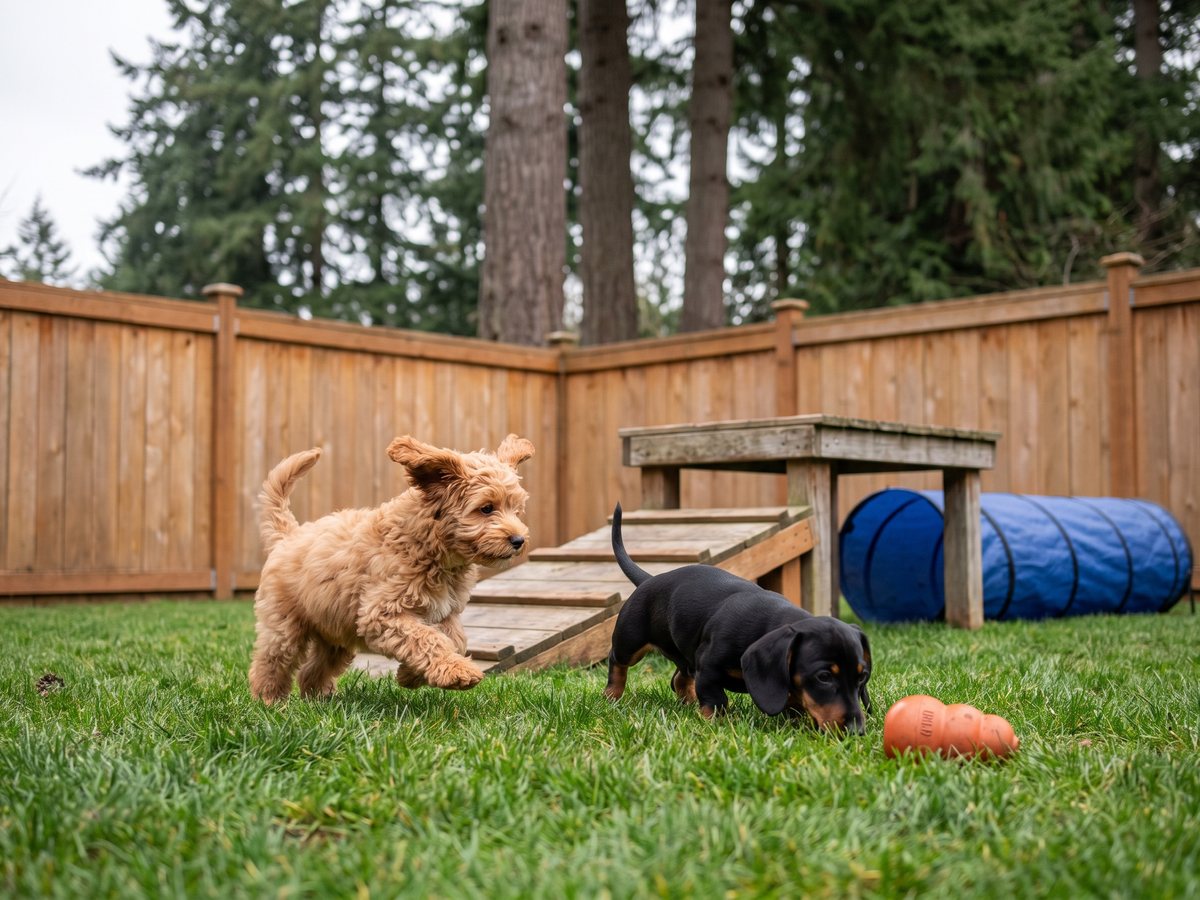
- Our puppies are raised at our home in Portland, Oregon, around people rather than in runs. How we raise a puppy describes the daily routine.
- We answer buyer questions personally and provide a written purchase agreement with clear payment and homecoming terms.
- Every puppy goes home with a veterinary health certificate, dated vaccination and deworming records and a microchip.
- Our written 2-year genetic health guarantee sets out its own coverage and requirements, and you can read what it actually covers before you commit to anything.
- For delivery, we require the full puppy price and delivery fee to reserve; for Portland pickup, we accept a 60% reservation deposit with the balance due before collection, and the full sequence is set out in how buying an Everpine puppy works.
- We ask about your household, because a mismatch helps nobody.
If any of that does not match your experience with us, that is worth telling us directly.
- Ask for specifics and see whether they hold. Consistency across two conversations is the strongest signal you have.
- Insist on live video. It is the fastest way to confirm the puppy exists.
- Read the guarantee before you pay. The conditions matter more than the headline.
- Traceable payment only. Wire, gift card and crypto requests are the clearest red flag there is.
- Apply the list to everyone. Including the breeder who wrote it.
When you are ready to start asking, our available puppies are all listed individually, with the breeder on the other end of every inquiry.
Breeding regulations differ by state and change over time. For the rules that apply where you live, check your state department of agriculture, and consult your own veterinarian on health questions.
Questions worth asking before you reserve
A good conversation should leave you with specifics, not just reassurance. Ask for the puppy’s current age, what veterinary records will be provided at homecoming, the parents’ relevant health-testing information, and who is responsible for transport. If a breeder advertises nationwide delivery, ask which states are served and how the puppy travels. A written purchase agreement should explain payment, timing and the health guarantee before you commit.
At Everpine, you can start by comparing the available puppies, then send an inquiry about the individual dog that interests you. This is a starting point for asking the same careful questions—not a reason to skip them.
More from the Everpine Journal
- Buying a Puppy
Registration Papers and Pedigree, Explained
5 min read - Buying a Puppy
Dachshund Puppy Price: What It Actually Costs
4 min read - Buying a Puppy
Maltipoo Puppy Price: What It Actually Costs
4 min read